

From Samuel Akapule, Sumbrungu (UE)
The Ecological Agriculture Department at Bolgatanga Technical University (BTU) has organized a seminar focused on sustainable agriculture and agribusiness development. The event, organised at Sumbrungu, the main campus of the University with funding from the European Union (EU) and technical support from the United Nations Capital Development Fund (UNCDF) under EU-Ghana Pact for Skills: Support Tertiary Education for Sustainable Employability The seminar aimed at promoting environmentally sustainable agricultural practices and fostering entrepreneurial opportunities among students in the agricultural sector.
The seminar provided an opportunity for students to learn directly from industry experts about the practical applications of ecological farming methods, helping them understand how these approaches can address current challenges within the agricultural value chain. This was especially relevant in the context of Ghana’s evolving agricultural landscape, which is impacted by both environmental constraints and shifting market demands.
The event attracted participants, with 84 students and seven faculty members in attendance with key industry figures, including Dr. Jacqueline Onumah , the Head of the Ecological Agriculture Department at BTU and the Secretary of the department’ Programme Advisory Committee (PAC), as well as the Chief Executive Officers of Akandem Farms, Mr Maxwell Akandem and Heights Food Processing, Matthew N. Akayeti, who led the panel discussions and shared their experiences.
Their presentations offered valuable insights into the real-world application of ecological farming practices and the business opportunities within sustainable agriculture.
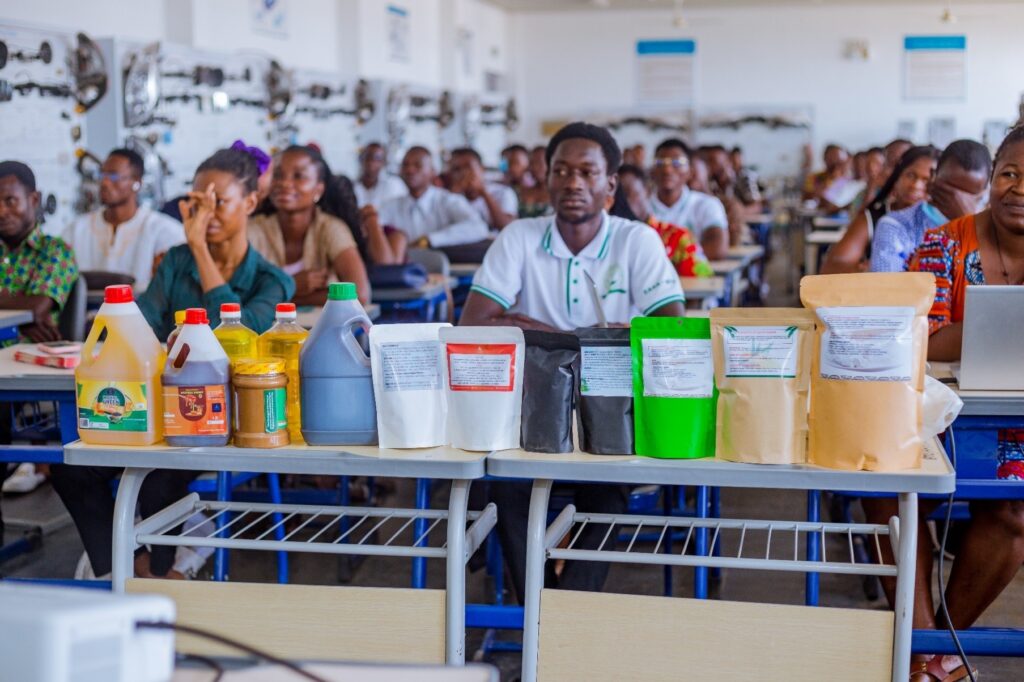
The seminar covered various crucial topics in ecological farming, with one of the keynote speakers, Mr. Akandem, sharing valuable knowledge on soil restoration, water and climate adaptation strategies, and ecological pest management.
Mr. Akandem, explained how ecological farming practices such as composting, crop rotation, and biochar help restore degraded soils, reduce farmers’ reliance on expensive chemical fertilizers, and improve long-term productivity. “Farmers can reduce fertilizer costs by up to 60% while improving soil quality and yield,” he stated, emphasizing the long-term benefits of sustainable farming practices.
Additionally, he discussed water conservation techniques like mulching and low-cost drip irrigation, which enable farmers to adapt to climate variability, increase harvests, and improve household income.
He also highlighted integrated pest management strategies, using natural solutions such as neem extracts and chili-garlic sprays to control pests, ultimately leading to safer food and reduced health risks for farmers.
The Chief Executive Officer (CEO) of Heights Food Processing delivered a presentation on the importance of climate-resilient food systems and innovative approaches to food processing and product development. The CEO explained how sustainable farming practices can be integrated into the food processing industry to create products that are not only environmentally friendly but also market-ready.
Ms. Millicent Puruseh, Senior Assistant Guidance and Counselling Coordinator at BTU and Lead of Career Services for the project, spoke about how the university is enhancing its digital competencies and strengthening industry collaborations.
She shared that BTU plans to offer more career-focused events such as seminars, job fairs, field trips, and internships, all designed to better prepare students for the workforce. “These initiatives are key to equipping students with the skills and knowledge needed to succeed in today’s job market,” she said, emphasizing the importance of providing practical exposure alongside academic training.
Mr. Alexis Adugdaa Ayamdor, Project Lead for the Integrated Digital Competency and Jobs Accelerator Project (IDAP) of BTU, emphasised the shared goal of this initiative with EU-Ghana Pact for Skills: Support Tertiary Education for Sustainable Employability. The project aims to enhance tertiary education’s role in improving graduate employability, particularly in the green and digital sectors. Through strengthened coordination mechanisms, increased digital skills training, and the provision of acceleration and incubation services, the initiative seeks to bridge the gap between education and industry needs in Ghana.
As part of BTU’ efforts the funding secured from EUis also being used to establish functional Integrated Digital Skills and Employability Hub (IDSEH) for the training of students through the IBM skillbuild platform and others. The hub, is offering trainings in high-demand areas such as artificial intelligence, the Internet of Things (IoT), data analytics, and cybersecurity, is part of a broader initiative to ensure students are equipped with market-ready skills.
“Through ongoing employability seminars and our skills hub, we aim to bridge the gap between academic learning, and the skills employers are looking for,” Ayamdor explained.
The seminar also highlighted the entrepreneurial opportunities within the agricultural sector. Participants were introduced to the potential for organic vegetable production, agro-processing, and even the creation of small businesses around ecological farming practices such as compost production and seed multiplication.
Beyond farming techniques, the seminar addressed operational realities such as time management and teamwork. Participants learned how to manage farming calendars, coordinate activities for efficiency, and utilize collective action to reduce costs and improve bargaining power.. The seminar also emphasized the importance of partnerships for internships, fieldwork, and research, ensuring that students gain real-world experience. These collaborations help strengthen the connection between academic learning and industry practices, giving students the chance to apply their knowledge on actual farms or in agro-processing centers.